
There Is No Moat in the Model
The future of AI competition will not be decided by who has the most magical model. It will be decided by who builds the strongest business around a world where the models increasingly converge.

When the now-famous Google memo declared that “we have no moat, and neither does OpenAI,” a lot of people heard it as a hot take about the early ChatGPT arms race. It was more than that. It was a warning about the structure of the market.
The point was not that models don’t matter. The point was that there is no permanent special sauce in the models themselves that will keep any one company above the noise forever.
That is what the market is proving. Across benchmark after benchmark, and increasingly in real-world use, the major labs are converging. One model may lead in coding, another in business writing, another in cost efficiency, another in multimodality, but the overall pattern is getting harder to ignore: most of the major players are moving toward the same general zone of competence.
If that trend holds, then the long-term winners in AI will not be determined by who has the most mystical model. They will be determined by who builds the best business around a world in which the models are increasingly interchangeable.
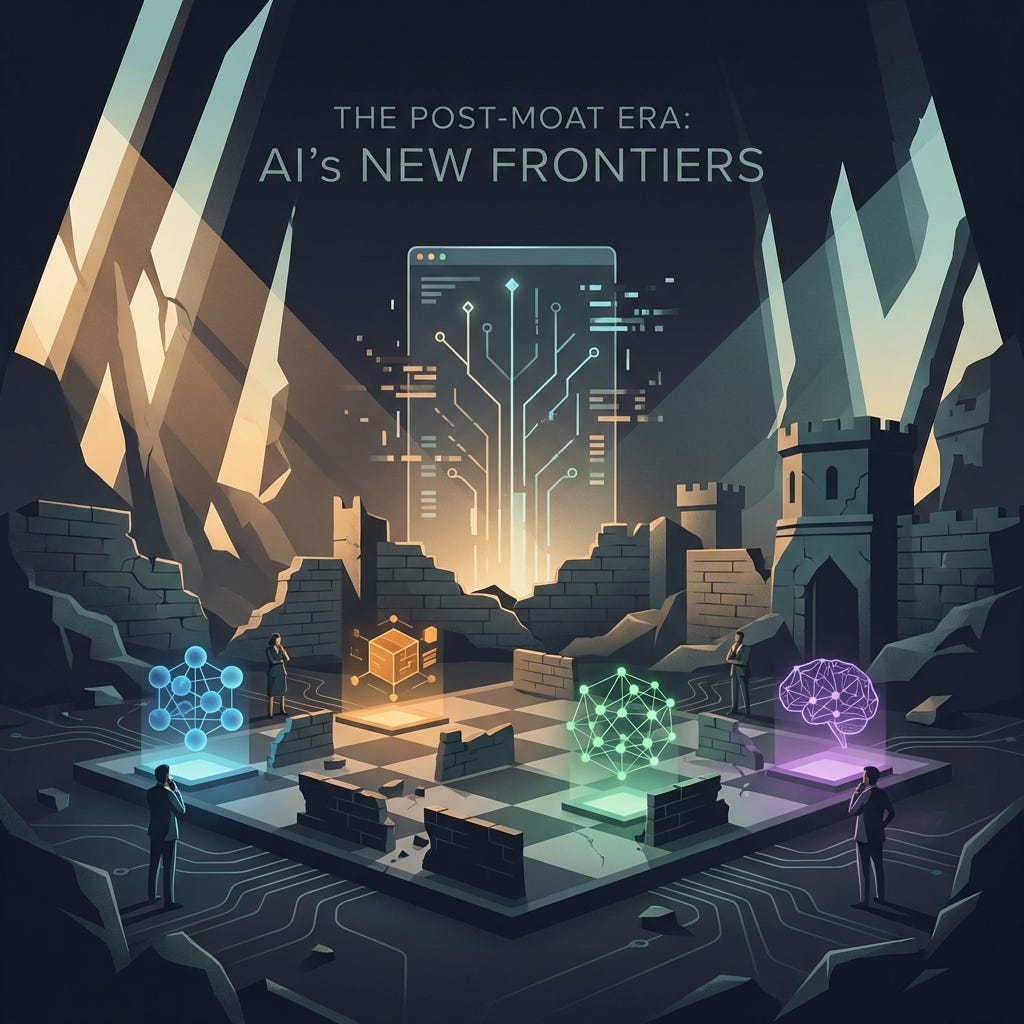
OpenAI: Convert consumer dominance into vertical power
OpenAI still has the strongest consumer brand in the business. ChatGPT is not just popular, it is shorthand for the category. That kind of mindshare gives OpenAI a lead that most competitors would love to buy if they could.
But if models are converging, broad brand dominance is only the beginning. The smarter move is to turn that reach into vertical-specific solutions with trusted partners in categories that matter economically: healthcare, finance, sales, tax, insurance, trading, real estate, recruiting, and education.
OpenAI has the market share. It has the ecosystem. Now it needs to stop thinking only in horizontal terms and start exploiting that lead by going niche wherever it can.
Anthropic: Become the rollout company
Anthropic has built unusually strong trust among business users. Claude feels serious, thoughtful, and enterprise-compatible. That is a powerful starting point, but it is not enough by itself.
Inside large organizations, the same story keeps coming up: everybody wants AI, everybody talks about rollout, but hardly anyone knows how to train teams, redesign workflows, or implement these systems in a way that sticks.
That gap is Anthropic’s opportunity. The company should build out enterprise-level rollout programs, professional services, implementation teams, and high-trust partnerships that help companies actually make AI usable, the way Salesforce once did with solutions engineers who could show up, configure the tool, sell the value internally, and make adoption real.
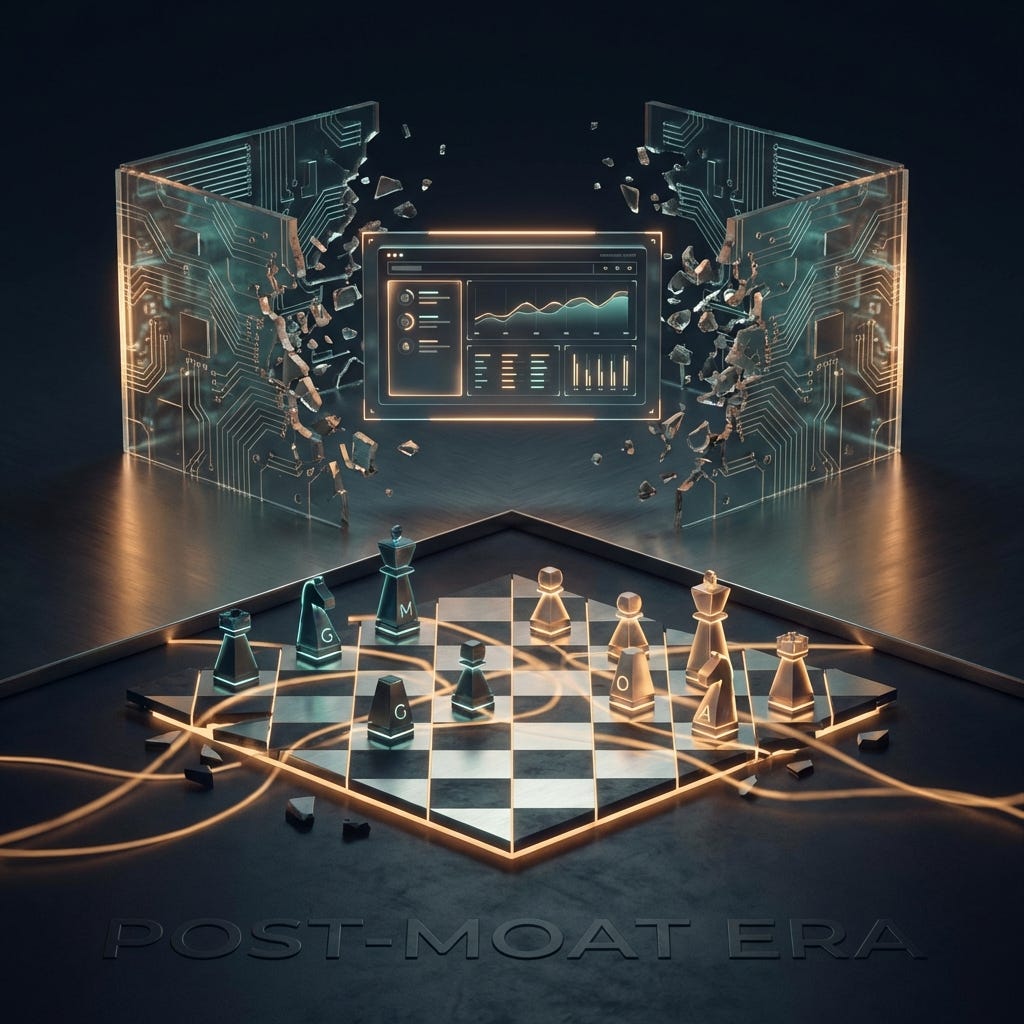
Google: Make intelligence too cheap to defend against
Google’s story in AI is becoming one of the most impressive reversals in the industry. Gemini caught up quickly, and in many use cases it did more than catch up. It became genuinely good.
More importantly, Google has a strategic option that its competitors cannot match as easily: it can push the cost of intelligence down hard enough to reshape the economics of the entire market.
That should be the play. Every advance in Gemini, every ecosystem bundle, every Workspace integration, and every release like Gemma 4 adds pressure to the rest of the field. Google is in the best position to make useful AI cheap enough that everyone else has to justify their margins somewhere else.
Grok: Give the market a reason to switch
Grok has visibility, personality, and Elon’s amplification engine. But visibility is not the same thing as enterprise credibility. Right now Grok still feels more like a strong brand than a fully articulated business platform.
If Grok wants to become a serious alternative, it needs to give both consumers and enterprises a better reason to switch. That means opening things up more, giving away more, making adoption easier, tightening the business story, and probably shipping a desktop app too.
Right now a lot of people can tell you Grok is interesting. Fewer can tell you what business problem it solves better than anyone else. That is the gap.
The winners will be the ones who build above the model
The Google memo was right in the most important sense: there is no permanent moat in the model itself. There is no magical level of intelligence that will protect a company indefinitely from imitation, price compression, or convergence.
The companies that remain competitive will be the ones that build above the model. OpenAI needs vertical depth. Anthropic needs enterprise rollout muscle. Google needs to keep collapsing the economics of the category. Grok needs a real platform story.
In the next phase of AI, the best model will still matter. But it will not be the whole game, and it may not even be the main game. The main game will be everything that surrounds it.